))
))
))
))
))
))
))
))


Why ESG Needs an Integrated ERP in Construction, Mining & Manufacturing
Environmental, Social, and Governance (ESG) reporting is now a critical requirement for contractors, project-based manufacturers, and mining companies. Global frameworks such as GRI, SASB, CSRD, and IFRS demand accurate ESG disclosures, while regional regulators impose their own compliance rules.
Yet, most organizations face the same obstacle: disconnected ESG data spread across spreadsheets, site reports, and standalone systems. As a result, it is difficult to capture reliable metrics, monitor KPIs, and prove compliance during audits.
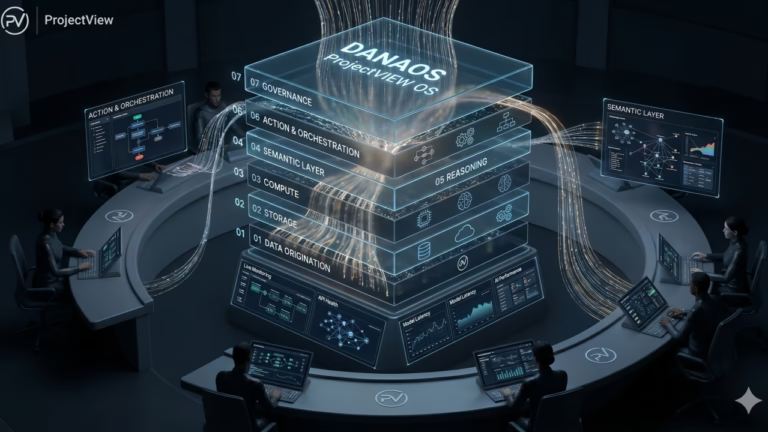
ProjectVIEW ERP changes this. Built specifically
for construction, mining, and project-based manufacturing,
it integrates Bill of Quantities (BoQ), Work Breakdown Structures (WBS),
and Cost Codes into a common data environment.
As a result, teams embed ESG performance into daily operations instead of tracking it in isolation.
🌍 Environmental ESG Use Cases
1. Carbon Footprint Tracking (Scope 1, 2, 3)
First, it logs machinery fuel, logistics, and material deliveries as CO₂ equivalents.
2. Energy Efficiency & Renewable Usage
It also monitors site and fleet energy consumption. In addition, it benchmarks renewable adoption against fossil use.
3. Water Usage & Management
Similarly, it tracks water consumption linked to BoQ items for sustainability reporting.
4. Waste Management & Circular Economy
Likewise, it captures recycling rates, hazardous waste handling, and disposal compliance.
5. Sustainable Procurement
Finally, it validates vendor certifications and ESG credentials through procurement modules.
👷 Social ESG Use Cases
6. Labor Standards & Worker Rights
First, it tracks fair pay, contracts, and hours to ensure compliance with ILO and local laws.
7. Workforce Diversity & Inclusion
It also monitors diversity metrics across projects (gender, nationality, role distribution).
8. Health & Safety (HSE)
In addition, it logs inspections, RFIs, and incidents to calculate LTIFR and other safety KPIs.
9. Training & Skills Development
Similarly, it captures training hours, certifications, and skills development programs.
10. Community Engagement
Finally, it uses subcontractor and customer portals to share ESG updates and project impacts.
🏛 Governance ESG Use Cases
11. Transparent Procurement & Anti-Corruption
First, it enforces audit trails, multi-level approvals, and fair bidding processes.
12. Role-Based Access & Audit Controls
In addition, it implements user rights management for full traceability.
13. Global & Local Compliance
It also supports ISO, SOC1/SOC2, and statutory ESG reporting requirements.
14. ESG-Linked Financial Reporting
Moreover, it connects ESG-related investments to financial KPIs for integrated disclosures.
15. Risk & Governance Dashboards
Finally, it provides executives with live dashboards for ESG risks, deviations, and compliance.
🔗 From ERP to ESG: Why Integration Matters
However, ESG pillars do not stand alone. Instead, they interconnect. For example:
- A supplier contract (Governance) affects both the carbon intensity of materials (Environmental) and the labor conditions of workers (Social).
- A site accident (Social) creates legal reporting obligations (Governance) and may impact resource efficiency (Environmental).
Above all, this interplay between E, S, and G is why integration is critical.
ProjectVIEW ERP’s BoQ ↔ WBS ↔ Cost Codes logic ensures:
- Teams enter ESG data once and reuse it everywhere.
- As a result, reports remain consistent, real-time, and audit-ready.
- In turn, companies achieve a single source of truth for ESG compliance and performance.
In practice, with ProjectVIEW ERP, ESG becomes an embedded business process, not an afterthought.
✅ Conclusion
In short, ProjectVIEW ERP transforms ESG from a compliance burden into a strategic advantage. By integrating environmental, social, and governance metrics into daily project execution, companies in construction, mining, and manufacturing can achieve:
- Transparent ESG reporting.
- Global and local compliance.
- Improved sustainability and profitability.