))
))
))
))
))
))
))
))


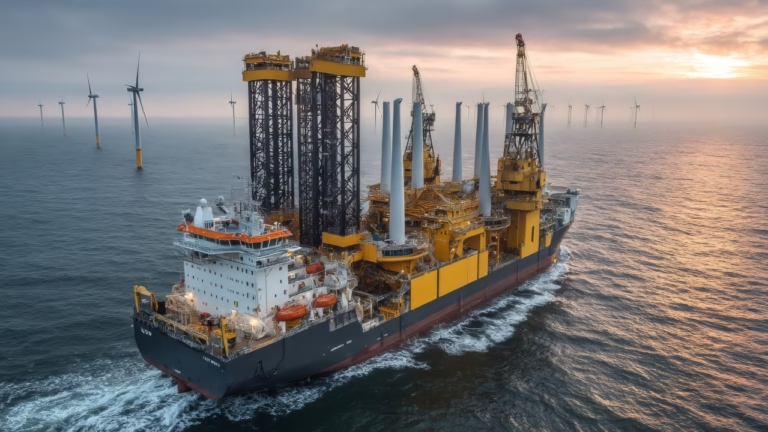
Offshore wind contractors and operators are delivering some of the most complex infrastructure projects ever built. From EPC and Balance-of-Plant (BOP) delivery to long-term wind farm operations, offshore wind projects combine marine construction, heavy lifting, subsea works, grid connection, and asset-intensive O&M. Moreover, they do so under extreme cost, regulatory, and weather pressure.
Yet most offshore wind teams still manage projects with fragmented tools: finance-centric ERP, standalone planning software, spreadsheets, and disconnected asset systems. This disconnect is now one of the biggest threats to profitability, schedule certainty, and asset availability.
Key pains faced by offshore wind contractors and operators
Cost volatility and margin erosion
First, offshore wind EPC and BOP contractors face relentless cost pressure. Inflation, vessel day rates, cable availability, interest rates, and financing constraints all drive it. Moreover, fixed-price contracts amplify risk when cost control does not tie directly to project scope and time.
Impact: uncontrolled overruns, reactive change orders, and eroding margins.
Complex EPC & BOP interfaces
In addition, offshore wind delivery involves multiple contractors, OEMs, marine operators, ports, utilities, and government entities. Even under an EPC model, therefore, responsibility splits across foundations, turbines, cables, substations, and grid interconnection.
Impact: scope gaps, disputes, duplicated costs, and unclear accountability.
Marine logistics and weather dependency
Weather windows and vessel availability dictate offshore productivity. Consequently, missed installation windows or vessel idle time can destroy schedules and budgets in weeks.
Impact: cascading delays, idle assets, demurrage, and rework.
Permitting and regulatory uncertainty
Similarly, policy shifts and permitting actions can halt offshore wind projects mid-execution. Contractors must then manage suspension, remobilization, claims, and contractual exposure—often across multiple jurisdictions.
Impact: cashflow disruption, contractual disputes, and schedule re-baselining chaos.
Offshore wind O&M inefficiencies
For operators, turbine availability and energy output drive profitability. However, teams often manage maintenance planning, spare parts, vessels, and crews in silos, disconnected from real operational usage and project history.
Impact: turbine downtime, spare shortages, inefficient maintenance campaigns, and lost revenue.
How ProjectVIEW ERP supports offshore wind contractors and operators
ProjectVIEW ERP is an industry-specific ERP for project-driven, asset-intensive industries. It is purpose-built for offshore wind EPC, BOP contractors, and wind farm operators—not adapted from generic finance systems.
Project-centric cost and schedule control (BoQ + WBS)
First, ProjectVIEW ties every transaction to:
- Work Breakdown Structure (WBS) for time and activities
- Bill of Quantities (BoQ) for scope and cost
As a result, estimating, budgeting, procurement, execution, and cost control stay synchronized throughout the project lifecycle.
Result: early visibility of deviations, faster corrective action, and protected margins.
Integrated EPC & BOP procurement and subcontractor control
In addition, the system generates procurement, RFQs, subcontractor contracts, commitments, and approvals directly from project work packages and BoQ lines—not from disconnected purchase orders.
Result: tighter commercial control, fewer scope leaks, and enforceable accountability across EPC and BOP interfaces.
Marine fleet, heavy equipment, and vessel management
Similarly, ProjectVIEW manages offshore vessels, marine equipment, cranes, and specialized assets with:
- Availability and utilization tracking
- Project-based operating hours
- Preventive and corrective maintenance
- Cost attribution per project and campaign
Result: optimized vessel utilization, reduced idle time, and maintenance aligned with actual offshore usage.
Controlled change management and claims readiness
Offshore wind projects are change-driven by nature. Therefore, ProjectVIEW embeds approval workflows and audit trails across variations, claims, and commercial decisions.
Result: faster decision-making without losing contractual control or entitlement.
Offshore wind O&M and asset availability optimization
For operators, ProjectVIEW also connects:
- Maintenance strategies
- Spare parts and inventory
- Crew and vessel planning
- Turbine and asset availability
As a result, maintenance schedules follow actual project-based operating hours, not static assumptions.
Result: higher turbine uptime, lower O&M costs, and predictable operational performance.
Secure collaboration across developers, contractors, and utilities
ProjectVIEW operates as a secure SaaS platform with controlled access for developers, EPCs, BOP contractors, operators, and partners. In this way, it supports multi-entity offshore wind programs.
Result: one source of truth across construction and operations, without data fragmentation.
Why offshore wind needs a project-native ERP
In other words, offshore wind is not a financial reporting problem—it is a project execution and asset orchestration problem. However, vendors did not design generic ERP systems for marine construction, EPC risk, or wind farm operations. An offshore wind ERP must therefore start from the project.
In short, ProjectVIEW ERP gives offshore wind contractors and operators:
- Project-centric cost control
- Integrated EPC and BOP execution
- Marine asset and vessel management
- Change and claims governance
- O&M performance and availability control
In the end, offshore wind success depends on controlling time, cost, scope, and assets as one system. DANAOS built ProjectVIEW ERP for exactly that reality.
Related: Marine & Offshore Construction ERP · Onshore and Offshore Pipeline Construction